
8 Times Barbie Broke the Mold to Celebrate Diversity
Jan 13, 2026 • Edgardo Toledo

Jan 13, 2026 • Edgardo Toledo
Since her introduction in 1959, Barbie has revolutionized how people view children’s toys. She has evolved into a global cultural icon, a definitive staple of childhood, and a doll that reflects the diversity of the world around her. Here are 8 Barbie dolls that show how far the brand has come in celebrating the unique beauty of every individual.
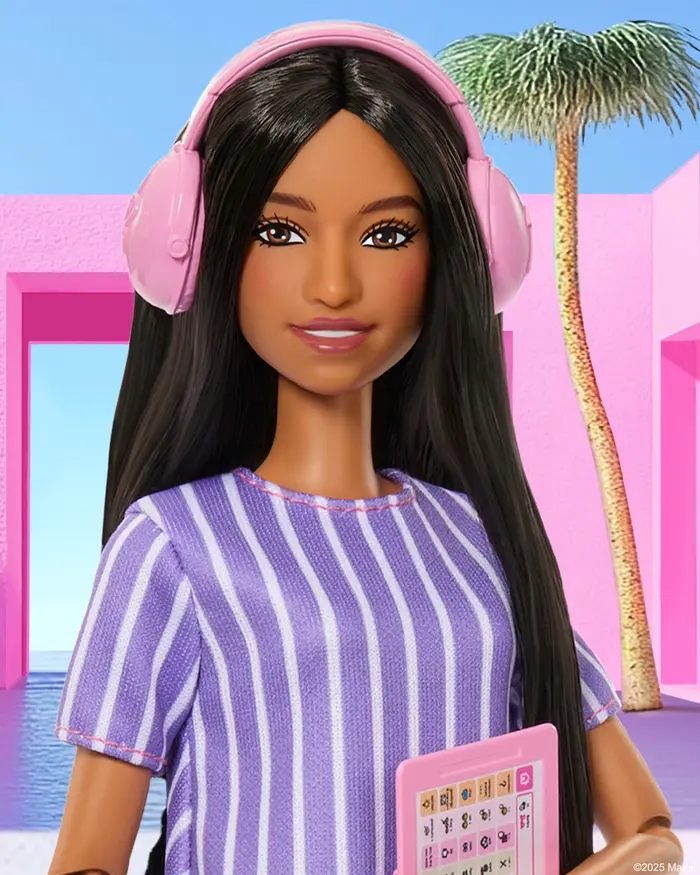
Mattel has partnered with the Autistic Self-Advocacy Network (ASAN) to create its first Barbie doll with autism, celebrating the diverse experiences of people on the autism spectrum. Eighteen months of thoughtful design went into creating the autistic Barbie, alongside ASAN, with the team carefully considering every aspect.
The doll can make expressive hand gestures, mirroring how some autistic people interact with the world or show excitement. Her eyes glance gently to the side, capturing the way some autistic individuals naturally process their environment by avoiding direct eye contact.
The accessories are thoughtfully chosen as well: a pink finger clip fidget spinner, noise-cancelling headphones, and a tablet, each designed to ease sensory overload and support daily communication.
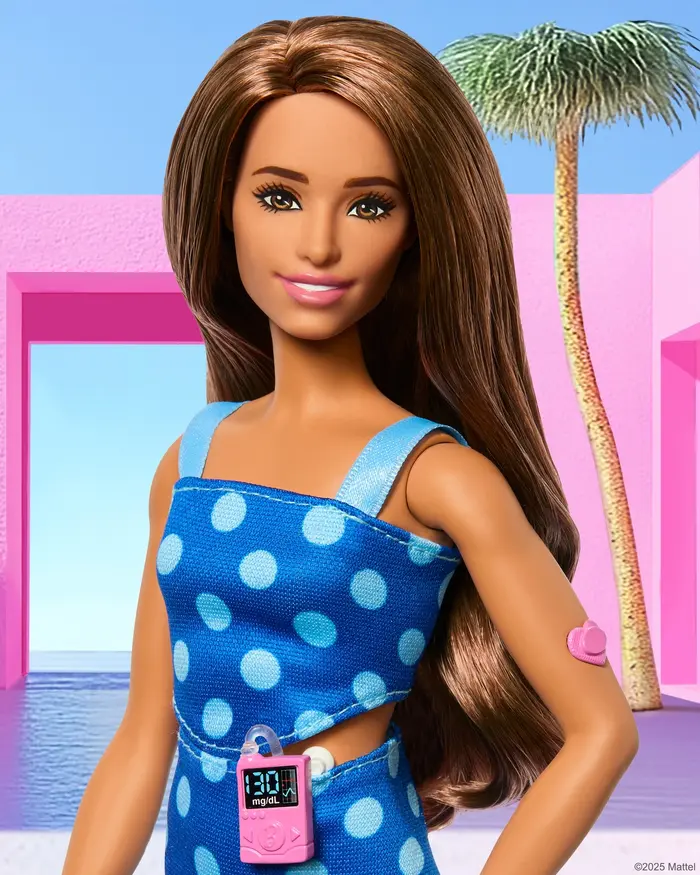
In collaboration with the advocacy organization Breakthrough T1D, Mattel introduced Barbie with Type 1 Diabetes (T1D). Designed with compassion, her chic blue-and-white polka-dot outfit honors the global symbols of diabetes awareness. Barbie also uses an insulin pump and a continuous glucose monitor (CGM), reflecting the everyday reality of managing T1D.
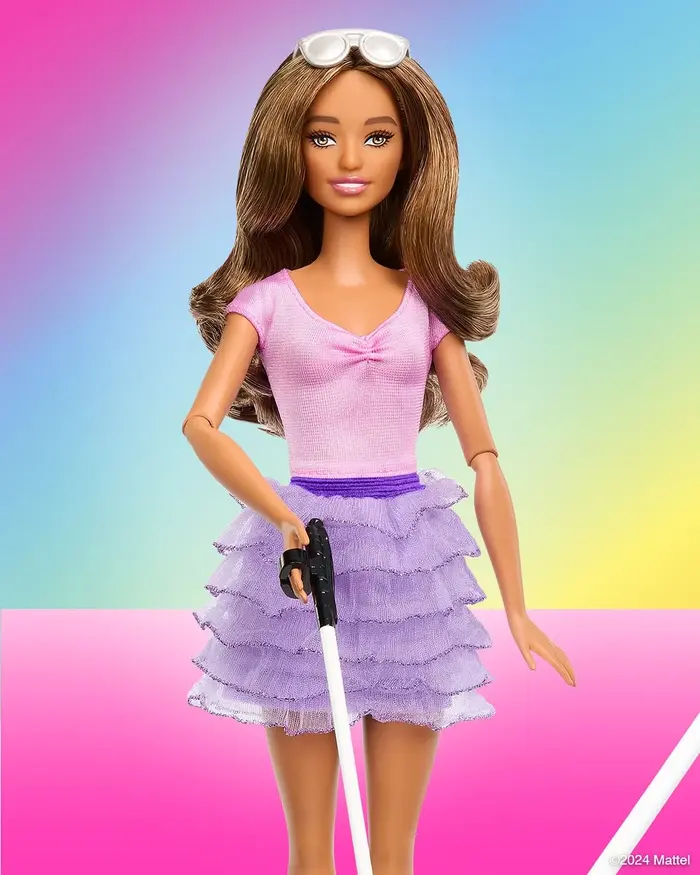
Mattel welcomed the addition of a blind Barbie doll, in collaboration with the American Foundation for the Blind (AFB), to represent individuals who are blind or have low vision. Every detail is intentional—from the white-and-red cane with its identifiable marshmallow tip to the satiny blouse and textured ruffle skirt designed to evoke tactile interest.
By including features such as functional sunglasses and an upward gaze, the doll honors the lived experiences of the blind and low-vision community.
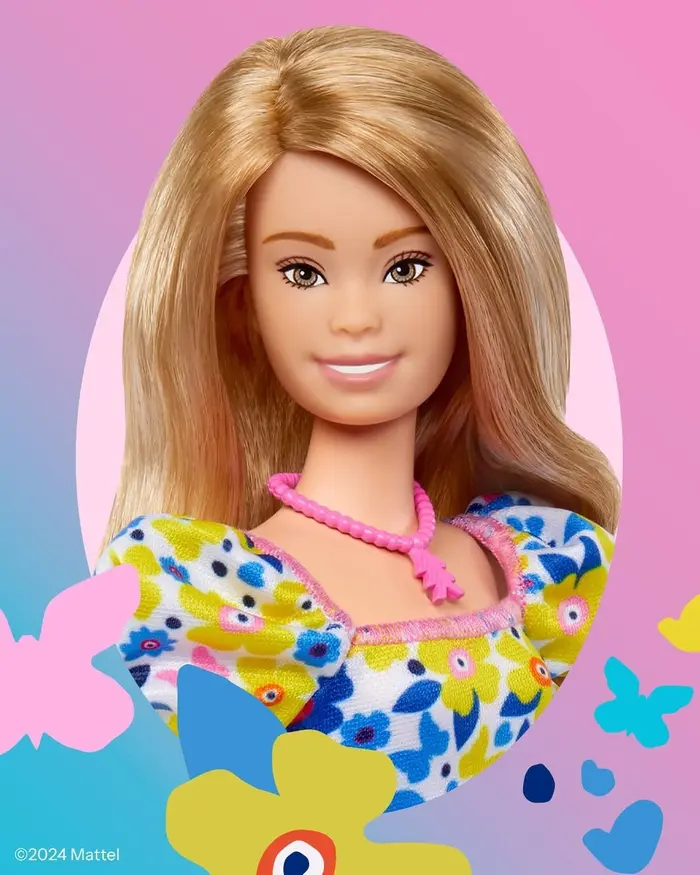
Partnering with the National Down Syndrome Society (NDSS), Mattel introduced its first Barbie with Down syndrome, with the campaign modeled by Ellie Goldstein. The doll has a shorter frame and longer torso, and even includes a single line on the palm, all characteristics often associated with the condition.
The puff-sleeved dress was adorned with butterflies and yellow and blue shades, colors, and symbols associated with Down syndrome awareness. And to top it off, the doll is wearing pink ankle foot orthotics (AFOs).
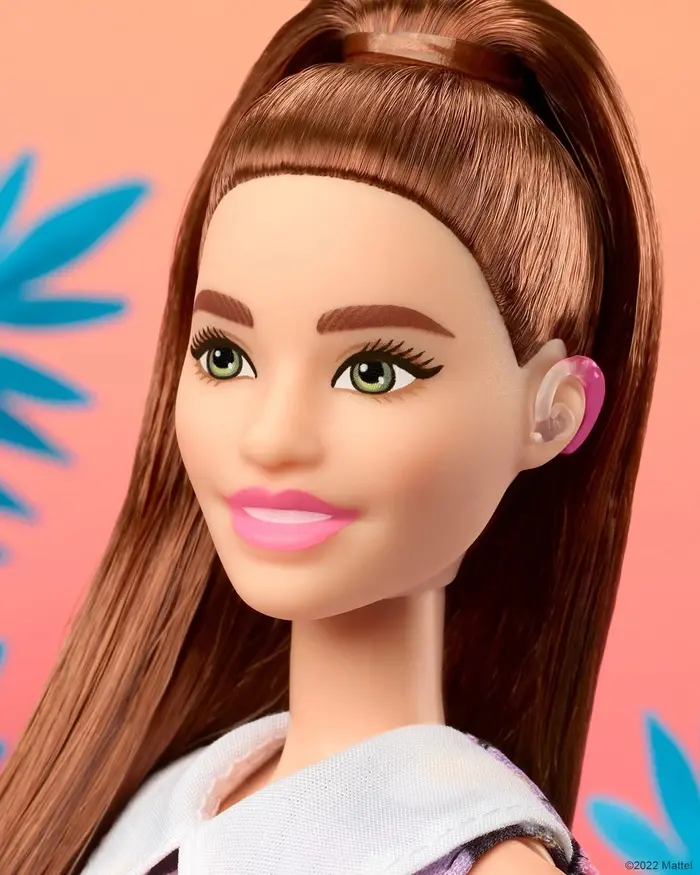
Renowned audiologist Jen Richardson, AuD, was consulted by Mattel to create the Barbie with hot-pink, behind-the-ear hearing aids. The fact that Barbie’s hearing aids are visible—rather than designed to blend in—emphasizes that hearing loss is not something to hide, but an essential part of her identity.
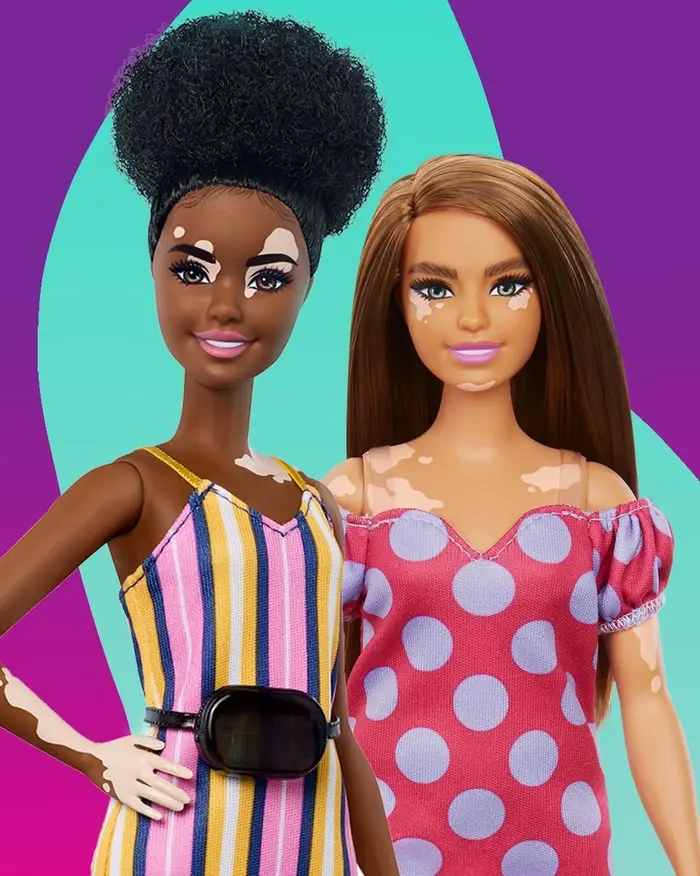
Vitiligo is a chronic autoimmune skin condition that causes patches of skin to lose their pigment. People with vitiligo, especially young girls, often grapple with low self-esteem, bullying, and loneliness. This Barbie challenged the standard of “perfection,” proving that beauty comes in every shade and form.
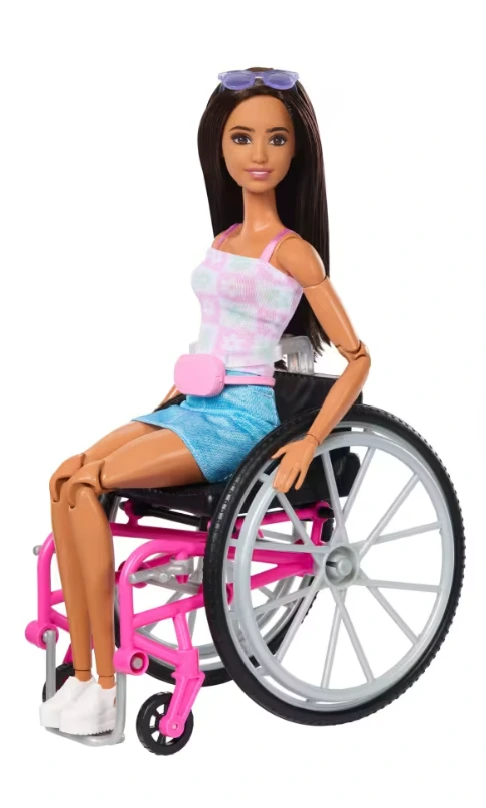
The Barbie in a wheelchair is among the best-selling dolls of the Barbie Fashionistas line. Mattel collaborated with UCLA and wheelchair experts to design a toy wheelchair that represents an individual with a permanent physical disability. Mattel also created a compatible ramp for the Barbie Dreamhouse. emphasizing that accessibility isn’t just a feature of the doll, but a part of her entire world.
The launch of the Barbie doll with a removable prosthetic limb is a powerful reminder of why representation matters. To ensure the design was authentic, Mattel teamed up with disability activist Jordan Reeves, who was 12 years old at the time, to help create a doll that accurately reflects the lived experience of having a limb difference.
The removable prosthetic limb not only provides a “more realistic” play experience but also reinforces the idea that there’s “nothing wrong” with people who have them.
Follow us on Facebook, Twitter, Instagram, Tiktok, and Youtube for the l8est entertaining, useful, and informative lists!

Input your search keywords and press Enter.


