
8 Feelings We Have About Friendster Coming Back In 2026
May 8, 2026 • Tim Henares

May 8, 2026 • Tim Henares
There are certain words that hit Filipinos of a certain age right in the maintenance meds. “Meteor Garden.” “Pabebe.” “Friendster.” So when the news broke that Friendster was coming back, there was a collective moment across the archipelago where millions of people simultaneously stopped what they were doing and felt something.
Hope, maybe. Nostalgia, definitely. And then, almost immediately after, confusion. This wasn’t quite the Friendster that we remembered. It is something stranger, something quieter, and honestly? Something we might actually need. Here are 8 things worth knowing about the return of everyone’s favorite ghost from the internet’s past.

Let’s be honest. The moment you heard “Friendster is back,” your brain did something involuntary. You remembered your profile. You remembered carefully curating your Top Friends list and the diplomatic nightmare that created. You remembered someone leaving you a testimonial and feeling genuinely seen. And then you downloaded the app, or read a little further, and realized that none of that, and we mean literally none of it, was waiting for you on the other side.
This is the part that stings a little. All of those testimonials, the profile photos, the blogs, the carefully chosen profile songs that told the world exactly who you were as a person in 2004 were deleted years ago. Friendster converted to a gaming site in 2011 and wiped its social networking databases in the process.
The 2026 version runs on entirely new infrastructure. Your login credentials will not work. They will be fond memories, but unless you downloaded them and kept those files somewhere and somehow still have access to your Photobucket, they’re not coming back.
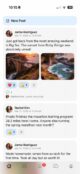
Here is where the new version earns some genuine credit. No advertisements. No algorithm deciding what you see and when you see it. No suggested strangers appearing in your feed. No bots trying to sell you something. No doom-scrolling rabbit holes engineered by people whose job it is to keep you staring at your phone. Just posts from people you actually know.
In 2026, that almost sounds radical. It also sounds like how social media was originally meant to be, before it turned into a way for corporations to harvest all our data and sell them to the highest bidder.
This is the feature that will either delight you or make you close the app immediately. To add someone to the new Friendster, both of you need to have the app open and physically bring your phones together. No sending requests to strangers. No adding people you met once at a party five years ago and have not spoken to since.
If you are not in the same room as someone, they simply do not exist in your Friendster world. It is either the most refreshing idea in social media in years, or a logistical nightmare, depending on your social life.

This is the one that stopped us in our tracks. If you do not meet a friend in person within a year, something confirmed by another phone tap, your connection on the app begins to fade. Eventually, it disappears entirely.
The app is, in effect, telling you: if you have not made time for this person in real life, you are not actually friends. That is either dystopian or the most honest thing a social media platform has ever done. Possibly both.
The timing of this is not accidental. Study after study has been documenting what researchers are calling a loneliness epidemic. There is a global, measurable decline in the quality and quantity of meaningful human connections. Social media, ironically, is partly blamed for accelerating it.
We have more followers than ever and fewer close friends. We perform our lives for audiences of hundreds while losing touch with the handful of people who actually matter. The new Friendster, whatever its flaws, is at least trying to point in the opposite direction.

The feeds are designed to outrage us. The metrics that reduced human expression to a number. The comparison culture made everyone feel simultaneously overexposed and invisible. The endless scroll that was engineered, deliberately, to be impossible to stop. We knew all of this. Studies told us. Our own mental health told us.
And we kept opening the apps anyway, because everyone else was there and leaving felt like disappearing. Maybe the question the new Friendster is really asking is: what would you use if the alternative was actually better?
The reason Friendster hit so hard the first time was not the glittery backgrounds or the testimonials or the profile songs, though those were fun. It was the feeling of being genuinely connected to people you cared about, in a space that felt personal and real. Somewhere along the way, social media stopped feeling like that. It started feeling like a performance, a competition, a source of anxiety dressed up as connection.
The new Friendster, for all its limitations, is at least asking the right question: what if we just tried to actually be friends again? Whether it succeeds or not, the fact that people are hungry enough for that to make this news says something about where we are right now.
We are lonely. We miss each other. And no app, old or new, is going to fix that. But showing up in person, tapping phones, and choosing to maintain the connection? That part is on us.
The Friendster app is available for download on iOS.
Check us out on Facebook, Instagram, X, TikTok, and YouTube, to be the first to know about the latest news and coolest trends!

Input your search keywords and press Enter.


