
Passing the Torch: The Filipino Sporting Greats and Their Heirs
Aug 10, 2026 • Mike Uy

Aug 10, 2026 • Mike Uy
Every time Filipina tennis sensation Alex Eala drops a win, group chats would implode, timelines would transform into live-stat breakdowns, and everyone turns into an instant, certified Women’s Tennis Association (WTA) ranking expert. Alex’s phenomenal run not only captured the hearts of many Pinoys, but it also made many of us think: “Wait… were Pinoys really that good at sports this whole time?”
The short answer is: Yes, we always have been.
Long before viral edits, highlight channels, and FIBA watch parties, Filipino athletes placed the Philippines on the world sports map. That “small but terrible” main-character energy is not a new trend; it is a whole generational flex.
Here is the deep dive on the GOAT sports icons who dropped the original blueprint, and the modern stars who are currently running the remix.
Active years: 1945 to 1964

Standing at just 5’3”, Felicisimo Ampon was nicknamed the “Mighty Mite” because he spent 30 years absolutely terrorizing taller, power-hitting opponents on the international court. What he lacked in height, Ampon made up for with unreal speed, cold-blooded court IQ, and a defense that drove opponents crazy. He holds the all-time PH Davis Cup record for most total wins (34) and casually knocked off Grand Slam finalists like it was a warm-up drill. His historic 1953 French Open run—where he stormed into the final rounds before taking a narrow loss—stood for decades as the absolute pinnacle of Pinoy tennis achievement.
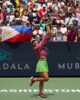
Fast forward to today, and Alex Eala isn’t just following that path—she’s completely re-writing WTA history. The Rafael Nadal Academy standout became the highest-ranked Filipina in history after shattering the WTA Top 30, taking down active Top-10 players, and charging deep into major second-week runs. She just proved it in the biggest way yet: in Washington, DC, she completed a reverse sweep over world No. 3 Jessica Pegula, 4-6, 6-4, 6-0, to capture the Mubadala DC Open—her first-ever WTA Tour title—after taking down No. 2 seed Elina Svitolina, No. 3 seed Naomi Osaka, defending champion Leylah Fernandez, and 2024 Paris Olympics champion Zheng Qinwen along the way, becoming the first Southeast Asian player ever to win a WTA 500 tournament. Alex delivered the same relentless hustle, with an updated, modern, full-on global GOAT trajectory.
Active years: 1919 to 1925

If basketball almost turned into a religion in the Philippines, then Carlos “Caloy” Loyzaga was one of its most successful missionaries. Earning the legendary title “The Big Difference” because of his sheer presence on the floor, he transformed guaranteed losses into historic wins. He led the Philippines to four straight Asian Games golds and a bronze finish at the 1954 World Championship—which remains the highest finish by any Asian country in FIBA history. In 2023, he became the first-ever Filipino enshrined in the FIBA Hall of Fame, cementing his legacy as the Philippines’ foundational basketball icon.

Standing at a towering 7’3”, Kai Sotto carries the ultimate weight of expectations as he continues his mission to become the first homegrown Pinoy in the NBA. Rather than taking a traditional path, Sotto’s journey has been an intense global grind: from grinding through Australia’s NBL and Japan’s B.League to making the jump to NCAA Division I ball. Backed by former NBA champions and coaching legends, Sotto’s quest remains one of the most followed, debated, and hyped storylines in modern Philippine sports.
Active years: 1919 to 1925
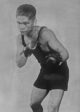
Long before Manny Pacquiao made global headlines, Pancho Villa (Francisco Guilledo) was laying down the ultimate blueprint in the roaring 1920s. Standing just 5’1” and weighing under 114 lbs, Villa was an absolute lightning bolt in the ring—with his relentless speed, endless stamina, and a punch that jolted everyone who underestimated him. In 1923, he dethroned Jimmy Wilde to become the first Asian world champion in history. The wild part? In his entire professional career, he was never knocked out! The Associated Press officially named him “Flyweight of the Century” in 1999.

Taking strength from his Igorot heritage and pride, Carl Jammes “Wonder Boy” Martin turned pro at just 16 years old and has been an unstoppable force at the ring ever since. Sitting on a flawless 28-0 record stacked with brutal knockouts, Martin is not just winning fights—he is dominating. Mentored directly by the “People’s Champ” Manny Pacquiao and training under top-tier promotion, Martin is lining up his own world title shot, bringing that same vintage, heavy-hitting Pinoy fight spirit into the modern spotlight.
Competed at the 1948, 1952, and 1956 Summer Olympics and the 1970 World Weightlifting Championships

Long before Olympic Gold was brought home to the Philippines, Rodrigo del Rosario was breaking barriers as the nation’s original strongman. A three-time Olympian, Del Rosario shocked the global powerlifting world at the 1952 Helsinki Games (1952 Summer Olympics) by setting an official Olympic and World Record in the military press. Not only did he prove that Filipinos could compete on the ultimate strength stage, but he also transitioned into coaching, directly training his own nephew to World Championship gold and creating a multi-generational culture of lifting excellence.

Weightlifting is literally the family business for the Diaz clan. Matthew and Alexsandra Diaz—the nephew and niece of legendary Olympic gold medalist Hidilyn Diaz-Naranjo—are already dominating international podiums as teenagers. Alexsandra recently made global headlines by sweeping three gold medals and shattering two youth world records in a single competition. They aren’t just wearing the Diaz name—they are actively building out a full-on weightlifting empire.
Competed at the 1964 Summer Olympics
In 1964, a 20-year-old Evelyn Magluyan made history by becoming one of the first Filipina gymnasts to ever step onto an Olympic floor in Tokyo. She competed with grace against world powerhouses at a time when sports infrastructure in the Philippines was practically non-existent for gymnastics. After her historic run, a dark period set in: it would take an agonizing 60 full years before another Pinoy gymnast would stand on that Olympic stage again. (Bonus pop-culture lore: her nephew is none other than global comedy superstar Jo Koy!)

That 60-year drought wasn’t just broken—it was completely demolished by Carlos Yulo during his legendary Paris 2024 campaign, where he captured two historic Olympic Gold medals (Floor Exercise and Vault) to become the country’s first multi-gold Olympian. But the Yulo takeover doesn’t stop there. His 18-year-old brother, Karl Eldrew Yulo, is right behind him, sweeping golds at the senior level and showing off the exact same mind-bending execution. The LA 2028 sibling duo arc is officially unlocked.
Active years: 1981 to 1993

Thelma Barina-Rojas is widely considered the ultimate matriarch of Philippine volleyball—and her origin story is iconic. She originally picked up a volleyball in school for one reason: to dodge a mandatory PE folk dance class. That casual decision sparked a career that yielded medals across six consecutive SEA Games, including back-to-back golds in 1987 and 1993. Known for her ferocious spikes and unmatched leadership, Barina-Rojas laid down the groundwork for the sport long before packed arenas and televised leagues were even a concept.

Enter Bella Belen, the powerhouse hitting engine carrying that mantle into the modern era. Dominating both the collegiate circuit and the Premier Volleyball League (PVL), Belen possesses that rare combination of high-flying athleticism and magnetic star power. She commands the exact same rabid, stadium-filling devotion from fans today that Barina-Rojas cultivated four decades ago, keeping the legacy of elite Pinoy volleyball alive and thriving.
Active years: 1912–1927 (with a 1916–1918 stint in the Philippines)
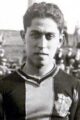
Born in Iloilo in 1896, Paulino Alcantara is quite literally one of the most important figures in global football history. Moving to Spain as a kid, he debuted for FC Barcelona at just 15 years old—remaining the youngest player to ever score in an official match for the club. Alcantara went on to score a staggering 395 goals in 399 matches. His all-time club scoring record stood untouched for an insane 87 years until a guy named Lionel Messi finally broke it in 2014. He was the original Asian global superstar before the term even existed.

History is attempting to repeat itself with Dro Fernandez, an 18-year-old Barcelona midfielder who traces his Filipino heritage through his mother. After working his way through Barça’s legendary La Masia academy, Fernandez recently netted his first senior goal for the club. While he’s represented Spain’s national youth setups, the Philippine Football Federation is actively making moves to recruit him for the Azkals—setting up a massive international choice on his horizon.
Active years: 1990 to 2009

Emerson Obiena spent the 1990s and 2000s grinding in relative anonymity, quietly putting in the work to keep the obscure sport of pole vaulting alive in the Philippines. He secured SEA Games medals in 1993 and 2007, battling minimal funding, outdated equipment, and lack of public awareness. Realizing the potential in his young son, Emerson stepped up as his very first coach, teaching him the fundamental mechanics, discipline, and mental toughness needed to launch a vault to the heavens.

That son was EJ Obiena, who is now, without a single shred of debate, the greatest pole vaulter in Asian history. EJ became the first Asian athlete to break the legendary six-meter barrier, climbed all the way to World No. 2, and locked down three straight Asian Championship titles alongside multiple SEA Games golds. From battling through major surgery to staging and winning a World Athletics-sanctioned event right on home turf in Makati, EJ has turned a once-overlooked event into a national point of pride.
Every “rising star” currently taking over your feeds is standing on the shoulders of giants—most of whom were under 5’5”, told their body type or background wouldn’t work, and stubborn enough to conquer the world anyway.
Pinoy sports history is not a quick reel that started with your favorite athlete’s Instagram. The lore runs deep, it spans generations, and the best chapters are still being written.
Follow Pinoy Coded on Facebook and Instagram for more on Philippine history, culture, and what it means for today’s Filipino.
Story by Mike Uy
Research by Kenneth Hernandez

Input your search keywords and press Enter.


