
There’s a Neighborhood in Manila Where Every Street Tells a Story About Jose Rizal
Sep 10, 2026 • Mike Uy

Sep 10, 2026 • Mike Uy
For anyone navigating the daily commute through Manila’s Sampaloc and Sta. Cruz districts, the slow crawl along Laong Laan or Dimasalang streets can be an uneventful ritual of Manila traffic. But if one should pause to take a closer look, it would soon become obvious that these are not just street names slapped along the route for the sake of location.
Streets in the Sampaloc and Sta. Cruz districts quietly spell out the entire arc of Dr. Jose Rizal’s life from his birth in Calamba, Laguna on June 19, 1861, to his death by musketry in the field of Bagumbayan on June 30, 1896. These streets remind us of Rizal’s life, paying tribute to his roots, his loves, his literary genius, his brave politics, and, eventually, his martyrdom.

Before it became “that one Rizal-coded neighborhood,” it was called Sulucan (a place of corners). Sampaloc was a wide rural area of rice fields and one of the original barrios that made up the old Sampaloc district.
Sulucan, or Hacienda de Sulucan, was once a colonial-era estate that passed through the hands of Spanish friars and, later, to the Monasterio de Santa Clara nuns. In the early 1900s, under American colonial rule, the Sulucan Development Corporation took over the estate and began subdividing it into a residential grid.

Situated north of the Pasig River, the real estate development called itself “Rizal Park” (not to be confused with the actual Rizal Park or Luneta Park). Its main spine, Dimasalang Street, still splits the subdivision into two: the Sampaloc District to the east, and the Santa Cruz District to the west.
After naming the development after the great Filipino hero, the developers also committed to naming the streets after people, events, literary works, and other things related to him. What eventually appeared was not just a grid of street names in a residential neighborhood, but a mapping of a national hero’s life one street at a time.
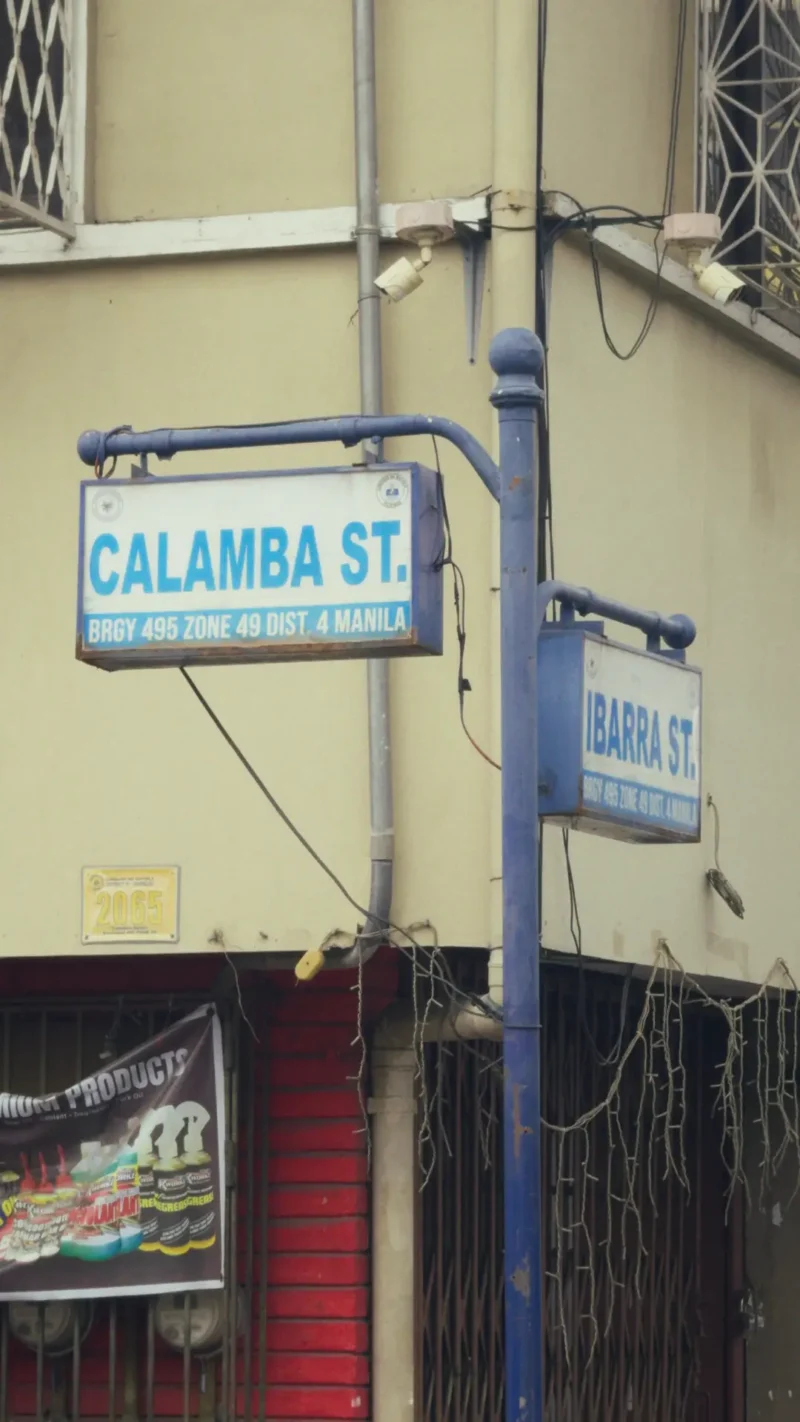
Several streets were significant in Rizal’s life. Calamba pays tribute to his birthplace in Laguna, while Dapitan points to the then-isolated town in Zamboanga where he spent four years in exile (1892–1896) after his implication in subversive activity. Nearby, Makiling and Antipolo nod to the Laguna and Rizal landscapes he grew up in. Interestingly, Rizal, as a child, visited the Antipolo Church with his father to give thanks for his safe birth after his mother’s difficult pregnancy. Four streets, one map of a life that kept getting uprooted and replanted.
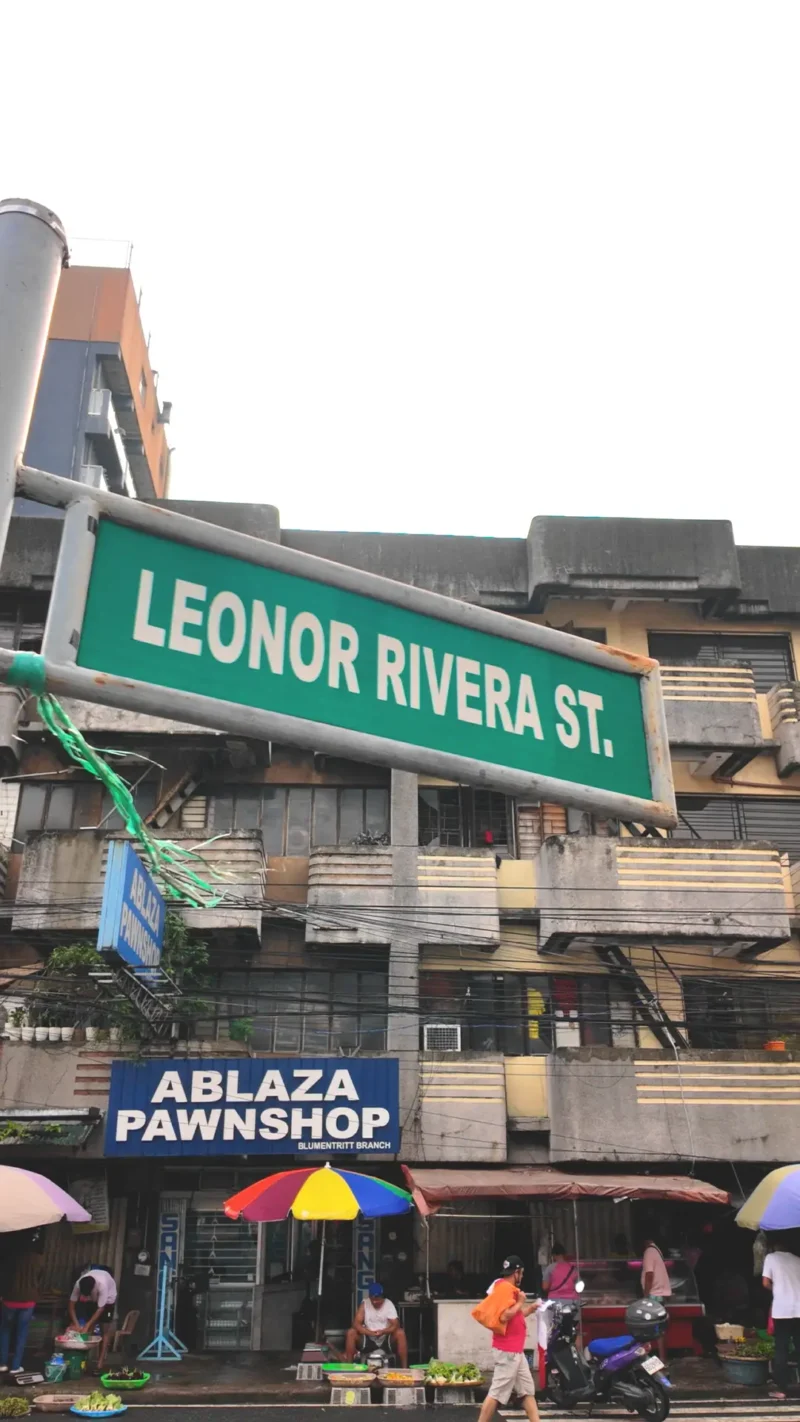
Rizal’s colorful love life is the subject of lore, and the streets of Sampaloc and Sta. Cruz give it prominence. Walk to Consuelo and be introduced to Consuelo Ortiga y Rey. She is the daughter of Don Pablo Ortiga, the former alcalde or mayor of Manila, with whom he had a brief romantic episode in Madrid during his student years. He even wrote her a poem. But things did not work out, and he moved on.
Then there is Josefina, the Filipinized form of Josephine, honoring Josephine Bracken, the Irish woman he met in Dapitan who became his last and most devoted partner. Josephine stayed with Rizal up to his final hours, and he also wrote her a short poem titled “Josephine” not long before his death.
Finally, we have L. Rivera, named for Leonor Rivera, Rizal’s childhood sweetheart and the inspiration for Maria Clara in Noli Me Tangere and El Filibusterismo. Three women, three romances, decades apart, but now immortalized in Manila’s streets.
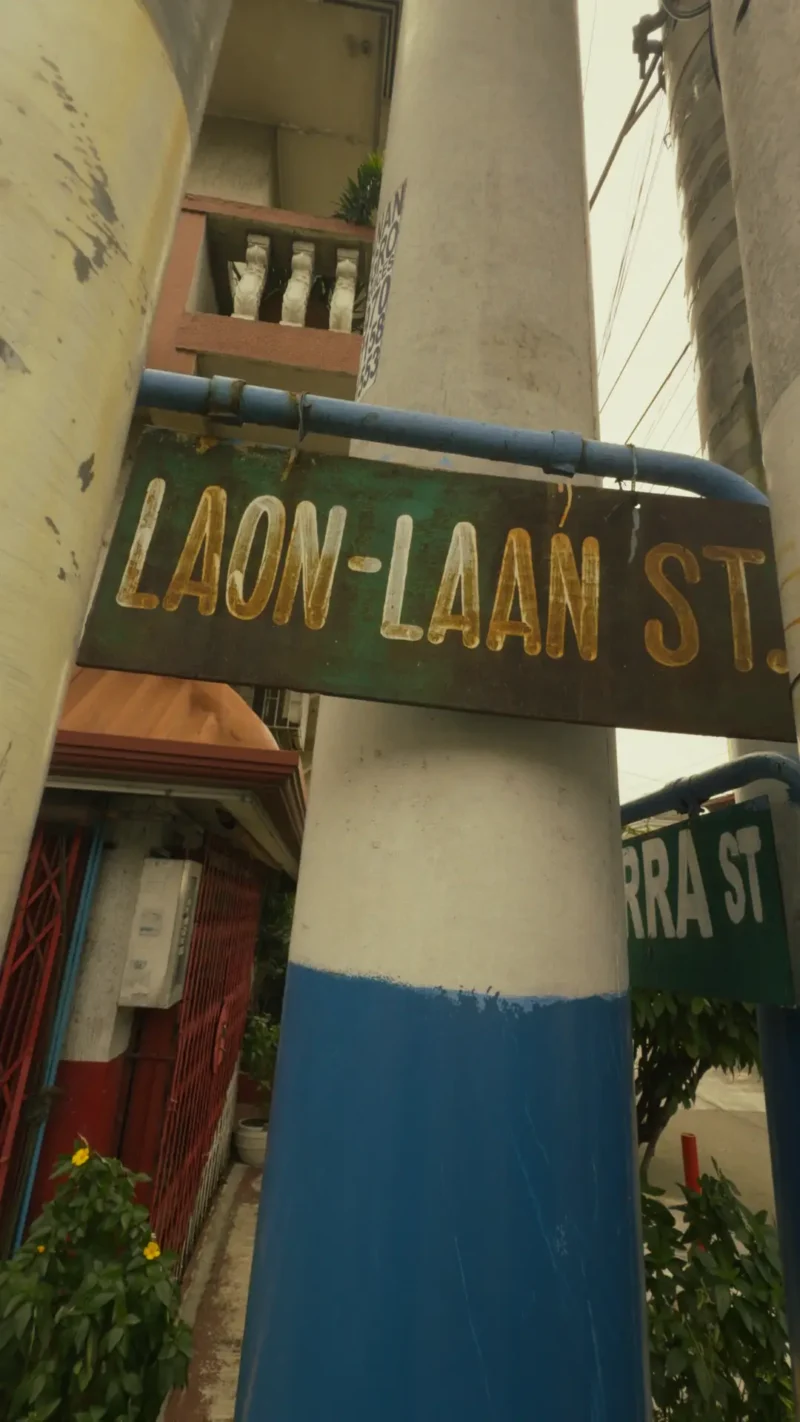
Rizal wrote under aliases, and two of them got their own streets: Laong Laan (“ever prepared” or “long dedicated”) and Dimasalang (“untouchable” or “beyond harm ”). Rizal used both during his years writing for La Solidaridad in Spain.
Then we have his novels Noli Me Tangere and El Filibusterismo, which also have streets named after their respective key characters.
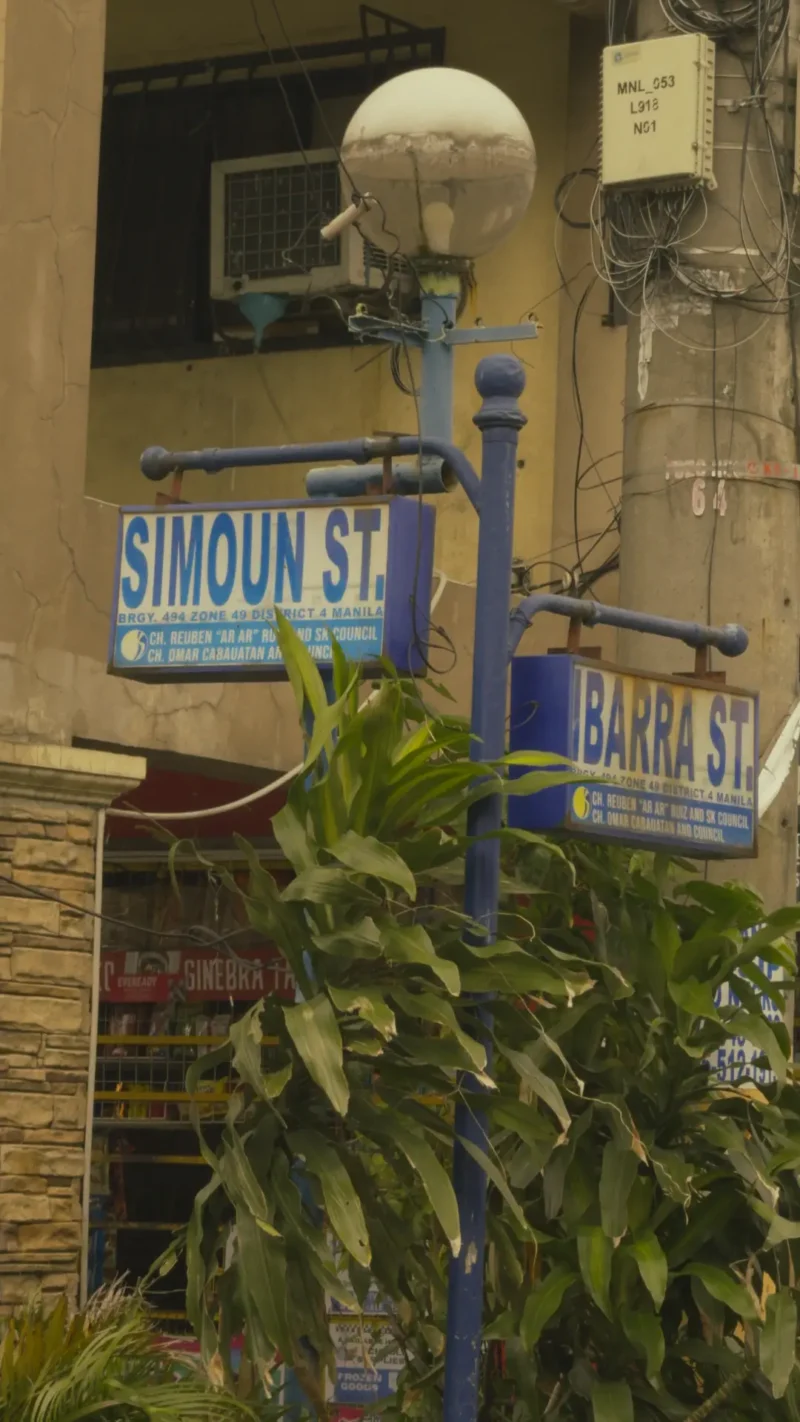
From Noli Me Tangere: Ibarra and Crisostomo streets honor Crisostomo Ibarra, the wealthy, reform-minded protagonist widely read as Rizal’s authorial stand-in. Maria Clara is his tragic love interest who, despite being devout, remains trapped by the same colonial-religious system the novel critiques. Elias is Ibarra’s fiercely loyal, revolution-minded friend, and arguably the novel’s real moral center. Sisa is the mother whose descent into madness is one of Philippine literature’s most gutting arcs. Tacio nods to Filósofo Tasio, the town’s misunderstood and book-hoarding philosopher.
From the sequel, El Filibusterismo: Simoun is Ibarra himself, resurfacing 13 years later as a wealthy, vengeful jeweler under a new identity, giving it the ultimate glow-up-gone-dark arc. Basilio, Sisa’s surviving son, bridges both novels as he grows from an orphaned child to a young revolutionary. P. Florentino honors the wise, conflicted priest who delivers one of El Fili’s most quoted final speeches. We also have Macaraig, the idealistic and wealthy student leader who symbolizes the idealism of youth.
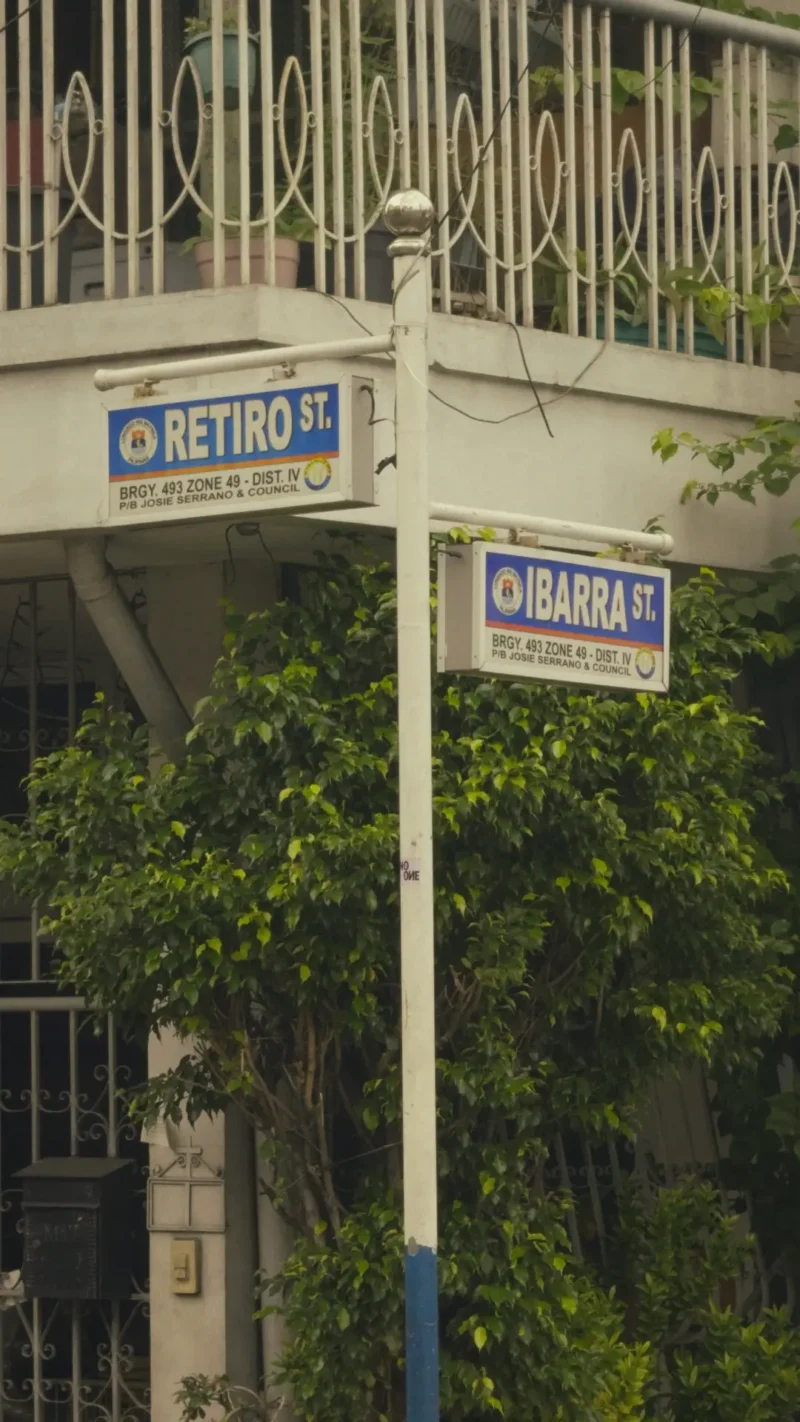
A few streets also pull from his collection of poetry and essays rather than characters. We have Metrica and Instruccion, powerful essays that tackle the beauty of Tagalog poetry and analyze the Spanish colonial elementary school system, respectively. There is also Musa which references his poem “My Muse,” Kundiman in honor of his patriotic love-song poem, Retiro for “Mi Retiro” (My Retreat) a poem he wrote while in exile in Dapitan, and Macamisa named for an unfinished Rizal novel.
Rizal’s intellectual and personal circle also got its own row of streets. Two Filipino priests played special roles in Rizal’s life. We have P. Leoncio, which honors the Calamba parish priest who was his early mentor in Laguna and the inspiration for El Fili’s Padre Florentino, and Casañas, for Fr. Pedro Casañas, who was the national hero’s baptismal godfather.
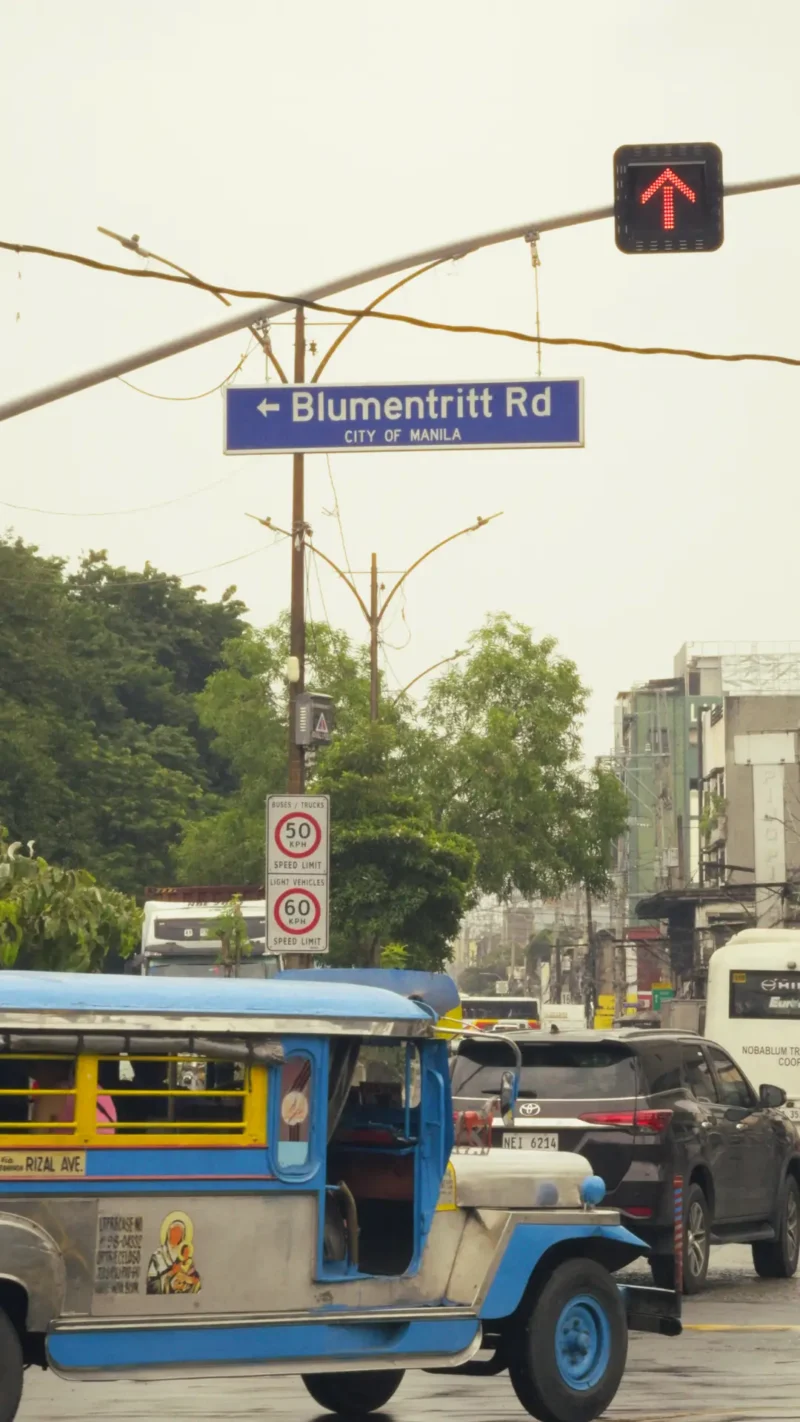
Then we have the streets that shaped Rizal’s political views.
We have Blumentritt in honor of Ferdinand Blumentritt, the Austrian scholar who became his closest pen pal and intellectual adviser despite the two rarely meeting in person. Pi y Margal for Francisco Pi y Margall, the briefly serving president of Spain’s First Republic, whose progressive, anti-colonial-leaning politics made him an ally of the reformist Filipino cause that Rizal represented from abroad. There is also Becerra, named after Manuel Becerra, the Spanish Minister of the Colonies who granted cityhood to Lipa, Batangas, in 1885 and a prominent Spanish Mason. Rizal wrote letters to Becerra in 1889 from Paris, appealing for due process regarding the persecution of his family during the Calamba agrarian disputes.
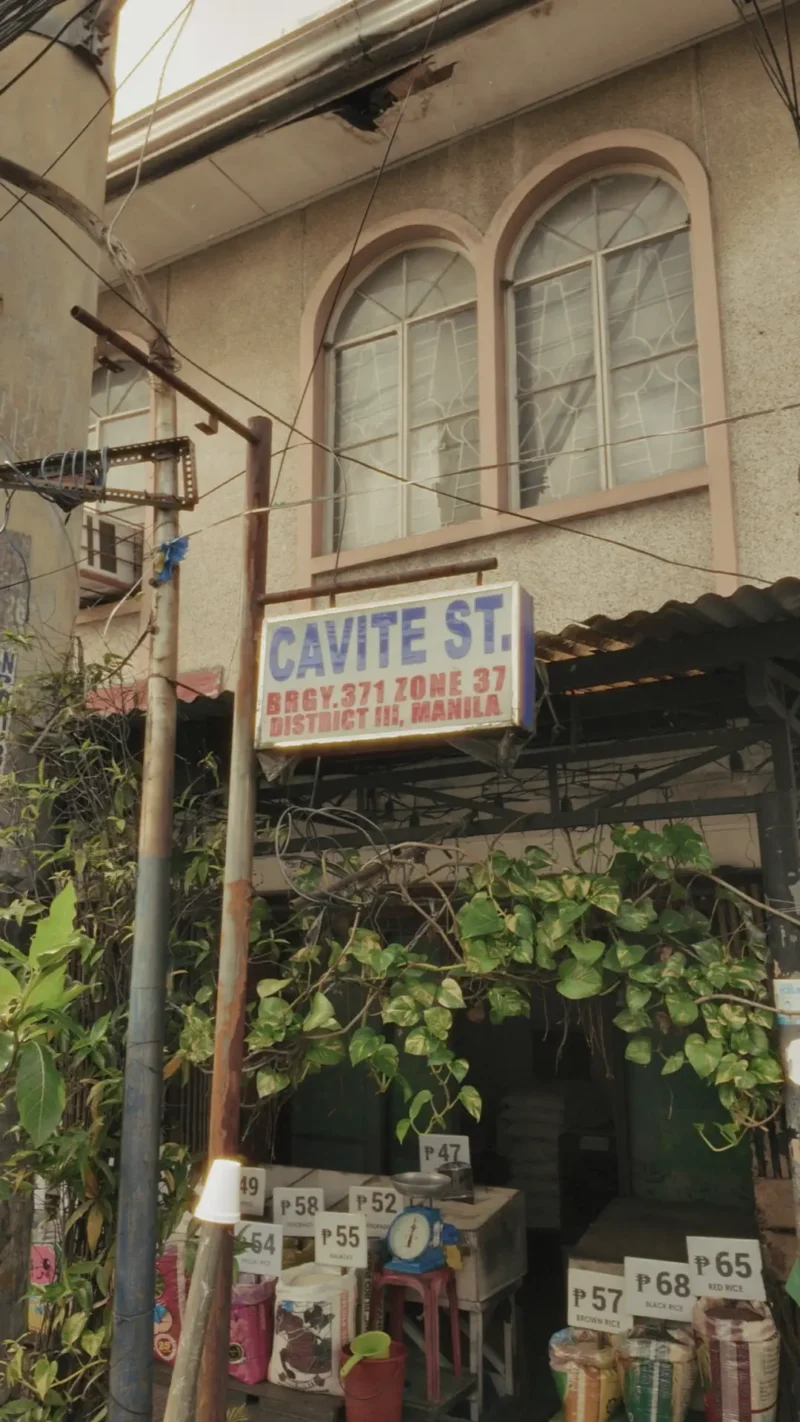
Streets are also named after events that stoked the flames of patriotism in Rizal and began his journey to martyrdom. The most significant is the 1872 Cavite Mutiny, which is commemorated in Cavite. The Cavite Mutiny led to the execution of the three Filipino priests Mariano Gomez, Jose Burgos, and Jacinto Zamora, better known collectively as Gomburza. The execution of the three priests by garrote radicalized a teenage Rizal. He later dedicated his second novel, El Filibusterismo, to the memory of the three martyred priests. Interestingly, Austin Craig, an American teacher and one of the hero’s early biographers, has a street near Cavite named after him.
Sadly, every life story must have an end. The streets of Sampaloc and Sta. Cruz give reference to the events and personalities that led to Rizal’s martyrdom. You may come across Andrade on your walk. Spanish military officer Lt. Luis Taviel de Andrade valiantly defended Rizal during the December 22, 1896, military court-martial that would decide his fate. The court-martial would sentence Rizal to die by musketry on December 30, 1896, in Bagumbayan, later renamed Rizal Park in his honor. The rest, as they say, is history.
So next time you are in the Rizal Park subdivision, take time to walk its streets and better appreciate Rizal. After all, not all heroes have an entire Manila neighborhood to recount their lives.
Check us out on Facebook, Instagram, X, TikTok, and YouTube, to be the first to know about the latest news and coolest trends!

Input your search keywords and press Enter.


