
ICYDK, Making Fun of PWDs Can Have Legal Consequences
Oct 15, 2026 • Kyzia Maramara

Oct 15, 2026 • Kyzia Maramara
As Filipinos, we all love to have fun and make jokes. So much so that we’ve probably slapped the good ‘ol “Joke lang naman!” disclaimer after making an offensive remark. But here’s something worth knowing: when the joke comes at the expense of a person with disability (PWD), it could have legal consequences, too.
View this post on Instagram
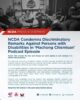
This conversation has resurfaced following the controversy involving the hosts of the Machong Chismisan podcast, who recently drew backlash for making derogatory remarks about Josh Aquino, the eldest son of Kris Aquino, who is on the autism spectrum.
The viral clip prompted criticism from netizens, disability advocates, and public officials and personalities, including the Autism Society Philippines and the Department of Social Welfare and Development (DSWD). The podcast hosts have since apologized and deleted the episode.
Laguna 1st District Representative Ann Matibag, chairperson of the House Committee on Women and Gender Equality, also condemned the remarks and reminded the public that Philippine laws protect PWDs against ridicule and discrimination. And yes, these protections go beyond the PWD discounts we’re all familiar with.
View this post on Instagram
In the Philippines, Republic Act No. 7277, also known as the Magna Carta for Disabled Persons, protects the rights and welfare of persons with disabilities.
The law was later amended by Republic Act No. 9442Republic Act No. 9442, which introduced additional privileges and, importantly, provisions against public ridicule and vilification of PWDs. So, what exactly counts as public ridicule?
Under RA 9442, public ridicule involves making fun of, imitating, or mocking someone because of their disability, whether through words, writing, or actions.
Its implementing rules and regulations further identify examples such as making degrading jokes about someone’s disability that result in embarrassment in front of two or more people, or offensively imitating PWDs in public performances, television programs, and other forms of entertainment.
The law also prohibits vilification, which includes making slanderous or abusive statements against PWDs and engaging in public activities that incite hatred, serious contempt, or severe ridicule toward them.
In simpler terms, making someone’s disability the punchline isn’t necessarily harmless just because it was intended to get a laugh.
Of course, not every offensive joke automatically constitutes a crime. Whether a particular remark violates the law depends on its content, circumstances, and the applicable legal requirements.
Here’s where things get even more serious. Under RA 9442, violations of the law may result in fines, imprisonment, or both.
For a first violation, the penalties include:
For subsequent violations, the penalties increase to:
These are statutory penalties for violations established under the law, not automatic punishments whenever someone makes an insensitive remark. And if you think these rules don’t matter in online spaces, think again.
The National Council on Disability Affairs (NCDA) has previously warned against online mockery and discrimination targeting PWDs. It has also encouraged the public to report derogatory content on social media platforms and seek assistance from appropriate authorities.
After all, something said on a podcast, posted as a comment, or uploaded as a supposedly funny video can reach thousands of people in seconds.
View this post on Instagram
There’s nothing wrong with enjoying comedy, sharing memes, or having a good laugh with friends. Humor is practically part of everyday Filipino life, from barkada banter to the endless jokes we encounter online.
But there’s a difference between making people laugh and making someone feel less of a person.
The controversy surrounding Machong Chismisan also opens a bigger conversation about the responsibility that comes with having an audience. Content creators and online personalities have platforms that can influence how people think and speak about others, including persons with disabilities.
As the Autism Society Philippines emphasized in its response to the controversy, disability should not be treated as a punchline for views, laughs, or online engagement.
Check us out on Facebook, Instagram, X, TikTok, and YouTube, to be the first to know about the latest news and coolest trends!

Input your search keywords and press Enter.


